

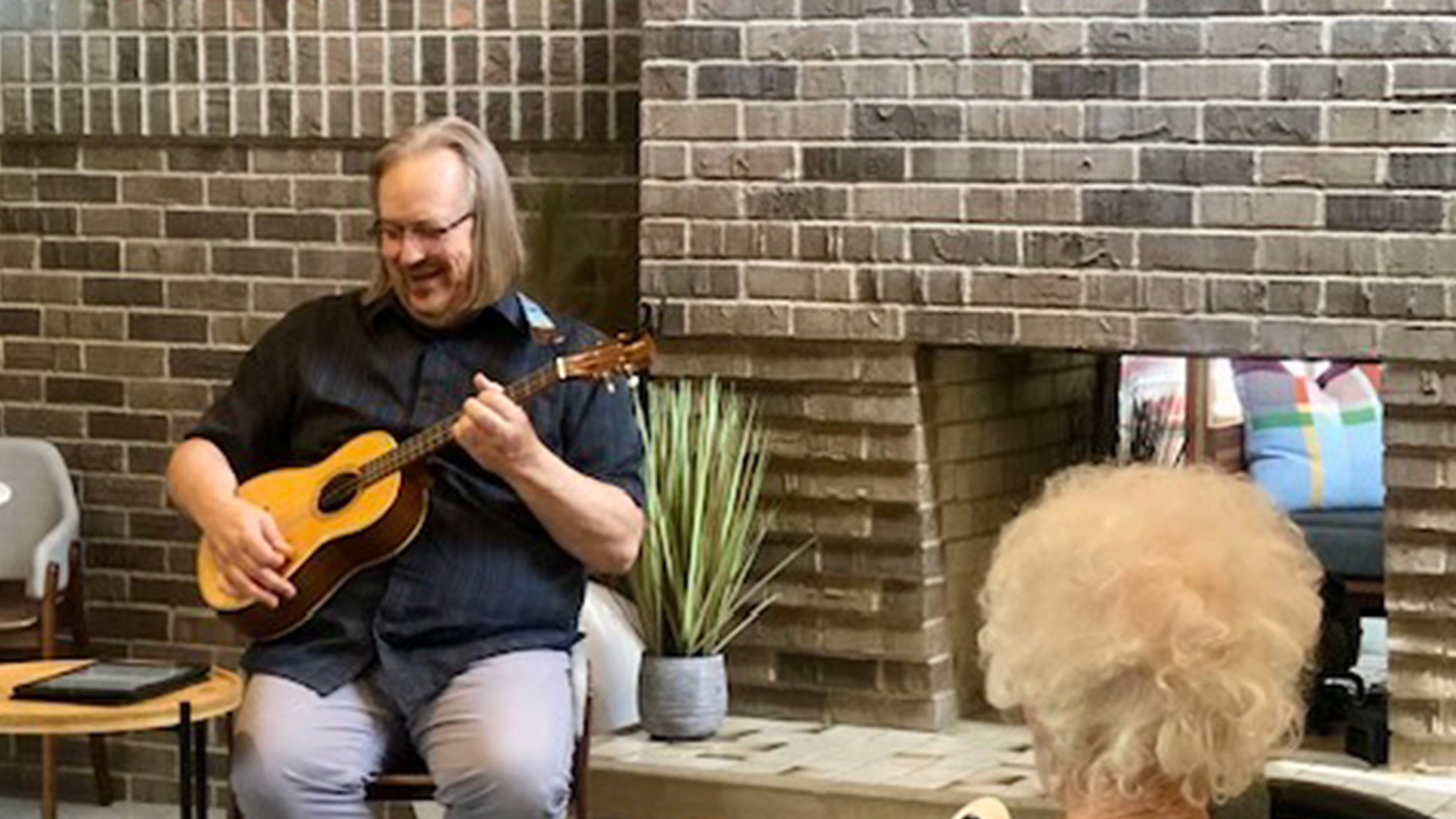
For the next hour, Christian will cycle through a century’s worth of music from a wide variety of beloved genres, from well-known spiritual tunes to radio classics from Elvis and John Denver.
The group, tentative at first, soon fills the room with smiles, hand-tapping, laughter, and commentary.
“Live music is always a resident favorite,” says Zack Parlier, English Rose Home Manager and Dementia Expert, as it often improves cognitive function among the residents.
“Our music therapists do more than just fill our homes with beautiful melodies; they create personalized music experiences that deeply resonate with each individual.
They help us feel. They use music to connect people to themselves and their memories, which can enhance cognitive function in individuals with dementia and contribute to overall wellness.
For those living with Alzheimer’s Disease and other dementias, music therapy engages them in a life review process that profoundly connects them to their personal joys and life meaning, while potentially slowing cognitive decline.”
Christian’s Expertise
Christian is one of a handful of inspired musicians who rotate through English Rose’s six assisted living and memory care homes every week.
With over a thousand hours of clinical training, he’s highly trained in music, psychology, physiology, education, and spirituality.
“I’ve seen people who are minimally verbal or deep into memory loss sing all the words to their favorite songs,” says Christian.
“His interactions with residents are always purposeful. He’s a master at artfully drawing out expression,” explains Zack.
He has a special way of using music therapy interventions to melt through hesitations, agitation, and physical limitations, particularly benefiting those with Alzheimer’s disease and dementia.
Benefits of Music Therapy
- Improves memory and communication, helps combat cognitive decline, and addresses behavioral symptoms
- Lowers blood pressure, stress, and pain
- Elevates positive feelings
- Enhances a sense of self-worth
The first music therapy educational program was introduced in 1944 at Michigan State University.
Music therapy is now widely embraced at leading healthcare institutions such as Johns Hopkins, the Mayo Clinic, and the Cleveland Clinic as an integral component of their wellness programs.
It’s been proven to improve memory and communication, lower blood pressure, stress, and pain, and elevate positive feelings and a sense of self-worth.
At English Rose, personalized music therapy is an important component of its holistic approach to wellbeing and is integrated into each resident’s individualized care program.
“Music therapy is a whole brain and body experience, especially beneficial for patients with Alzheimer’s disease and other forms of dementia,” says Christian.
“It stimulates, calms, and comforts the senses, serving as an accessible way to express emotions and comfort the spirit, while potentially mitigating cognitive decline and supporting cognitive function, as well as reducing agitation.”
